Mujjahid Huq: “My Paradise Lies Beneath Her Feet” and the Leadership We Don’t Applaud
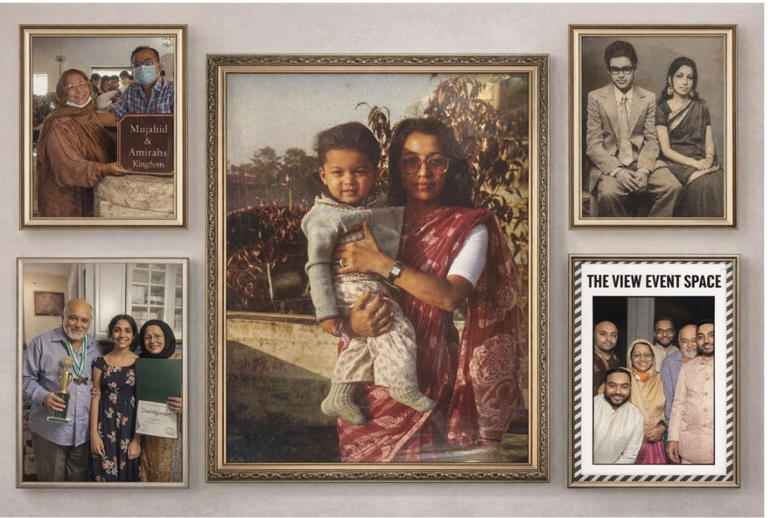
Leadership is often measured by visibility. Who speaks the loudest. Who moves the fastest. Who builds something that can be pointed to, scaled, or shared.
But some of the most consequential acts of leadership leave no public record at all.
There is a story, preserved in classical Islamic tradition, that offers a different measure of success—one rooted not in ambition, but in restraint.
A man once left his home in Farghaanah, in Central Asia, intending to perform a voluntary pilgrimage to Makkah. Along the way, he stopped in Nishapur to visit the scholar Abu Uthmaan Al-Khairi. When the traveler offered a greeting, the scholar did not respond. The silence unsettled him. How, he wondered, could a man of learning ignore a simple salaam?
According to the tradition, Abu Uthmaan perceived the traveler’s unspoken frustration and replied with a question instead of an apology: How can someone set out for pilgrimage while leaving behind a mother who is ill and grieving?
The words landed with force. The man abandoned his journey and returned home. He remained with his mother, caring for her quietly until her death. Only then did he return to Nishapur, where Abu Uthmaan rose to greet him warmly—honoring not the pilgrimage he delayed, but the responsibility he chose.
The lesson is unambiguous. Voluntary devotion, however noble, cannot replace an existing obligation. In this telling, the greater journey was not the one toward a distant holy site, but the one that led back home.
The Discipline of Care
Across cultures and faiths, mothers are spoken of with reverence. But reverence is easier in words than in practice. Caregiving—especially for aging parents—demands patience, humility, and a willingness to reorder one’s life around someone else’s needs.
In Islamic teaching, this responsibility is not abstract. The Prophet Muhammad described a mother’s supplication as mustajaab—answered without doubt—and taught that paradise lies beneath her feet. These statements are not meant as poetic sentiment; they are ethical instruction.
Yet modern life often moves in the opposite direction. Independence is framed as virtue. Mobility is equated with progress. Obligation, when it interrupts momentum, is treated as an inconvenience rather than a calling.
What gets lost in that framing is the idea that care itself is a form of leadership.
Leadership Without Witnesses
Mujjahid Huq has spent much of his public life working at the intersection of healthcare, community advocacy, and entrepreneurship. In previous interviews, he has spoken less about personal achievement than about continuity—how values practiced privately tend to surface publicly over time.
The story of the man from Farghaanah reflects that same principle. Leadership, in this view, is not defined by how far one travels or how much one accumulates, but by whether one honors responsibility when it offers no recognition.
Staying behind rarely looks heroic. It does not produce headlines. It does not come with milestones or metrics. But it does require something harder to cultivate than ambition: restraint.
In a culture that rewards acceleration, choosing to slow down can feel like failure. In reality, it may be the clearest expression of integrity.
A Quieter Measure of Success
As societies confront aging populations, fragmented families, and rising isolation, the ethics of care deserve renewed attention—not as nostalgia, but as necessity. Honoring parents, particularly mothers, is not a detour from purpose. It is often the foundation of it.
The man who postponed his pilgrimage did not lose anything of lasting value. He gained alignment between belief and action. When he eventually returned to the scholar, he was not praised for what he accomplished, but for what he upheld.
In a time when leadership is increasingly performed, perhaps the most meaningful acts are those that remain unseen—acts that affirm that some responsibilities cannot be deferred, and some journeys begin and end at home.